
AI-Powered Cyberattacks: How Hackers Are Using AI to Outsmart Traditional Defenses
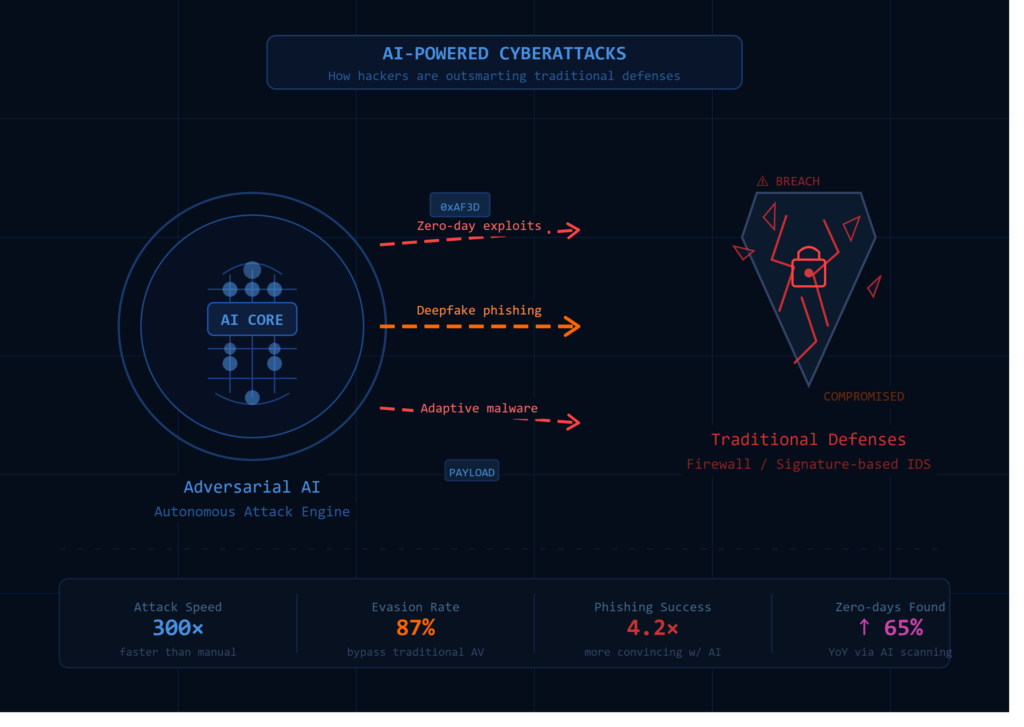
Imagine receiving a video call from your CEO asking for an urgent fund transfer. The voice sounds identical. The face looks genuine. Everything about the request appears legitimate.
Except it isn’t.
An AI-powered cyberattack is underway.
What once seemed like science fiction is rapidly becoming reality. Cybercriminals have always adapted to new technologies, but artificial intelligence has given them unprecedented capabilities. From creating realistic deepfakes to automating phishing campaigns, attackers are using AI to deceive victims and bypass traditional security measures. As a result, organizations worldwide are facing a new generation of cyber threats that are more scalable, adaptive, and dangerous than ever before.
Table of Contents
What are AI-Powered Cyberattacks?
AI-powered cyberattacks are malicious activities in which hackers use artificial intelligence and machine learning to automate, enhance, and scale cyber threats. Unlike conventional attacks that require extensive manual effort, AI enables cybercriminals to execute sophisticated operations with remarkable speed and precision.
The rise of generative AI tools has lowered the barrier to entry for attackers. Today, cybercriminals can create convincing emails, generate malicious code, mimic human voices, and identify vulnerabilities within minutes. As businesses continue to embrace digital transformation, attackers are exploiting the same technologies to target organizations more efficiently than ever before.
How Hackers Use AI?
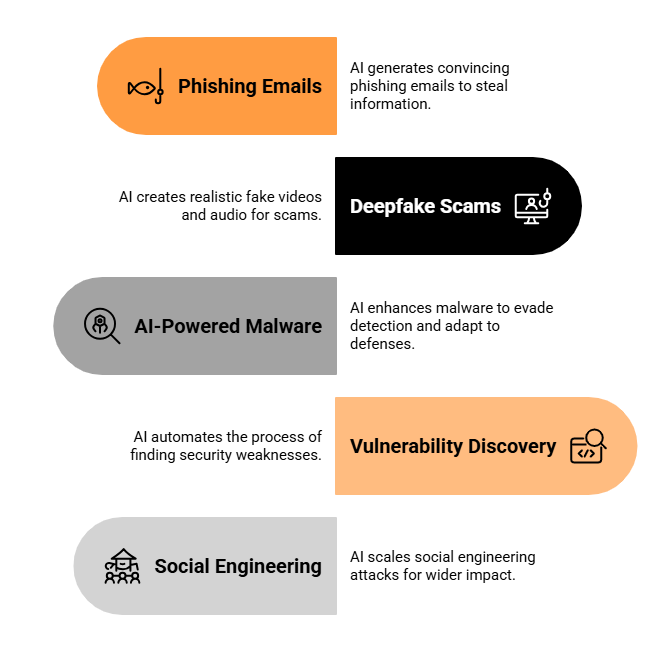
1. AI-Generated Phishing Emails
Traditional phishing emails often contained poor grammar and generic content, making them easier to detect. AI has changed that.
Modern generative AI tools enable attackers to create highly personalized emails that imitate the tone and writing style of executives, colleagues, or trusted brands. By analyzing publicly available information, cybercriminals can craft messages that appear legitimate and significantly improve their chances of deceiving victims.
Because these emails are polished and context-aware, they are much harder to identify than traditional phishing attempts.
2. Deepfake Scams
Deepfake technology has become one of the most alarming applications of AI in cybercrime.
Using AI-generated audio and video, attackers can impersonate executives, celebrities, or even family members. A seemingly authentic video call or voice message may be entirely fabricated, making it difficult for victims to recognize the deception.
These attacks exploit trust rather than software vulnerabilities, making them particularly effective.
3. AI-Powered Malware
Cybercriminals are increasingly using AI to create smarter malware.
AI-powered malware can:
- Adapt its behavior to avoid detection.
- Modify code automatically.
- Identify valuable targets inside networks.
- Learn from defensive responses.
This ability to evolve makes AI-driven malware significantly more difficult for conventional antivirus solutions to stop.
4. Automated Vulnerability Discovery
Finding weaknesses in systems used to require extensive manual effort. AI is accelerating the process.
Attackers use AI to:
- Scan thousands of devices simultaneously.
- Detects outdated software versions.
- Analyze source code for vulnerabilities.
- Prioritize high-value targets.
As a result, hackers can exploit security flaws faster than organizations can patch them.
5. Social Engineering at Scale
Social engineering attacks rely on manipulating human behavior. AI has made these attacks far more scalable.
By analyzing publicly available information, cybercriminals can understand:
- Personal interests
- Professional relationships
- Communication patterns
- Behavioral tendencies
This enables attackers to launch highly targeted campaigns against thousands of individuals simultaneously, dramatically increasing their success rates.
Real-World Cases of AI-Assisted Attacks
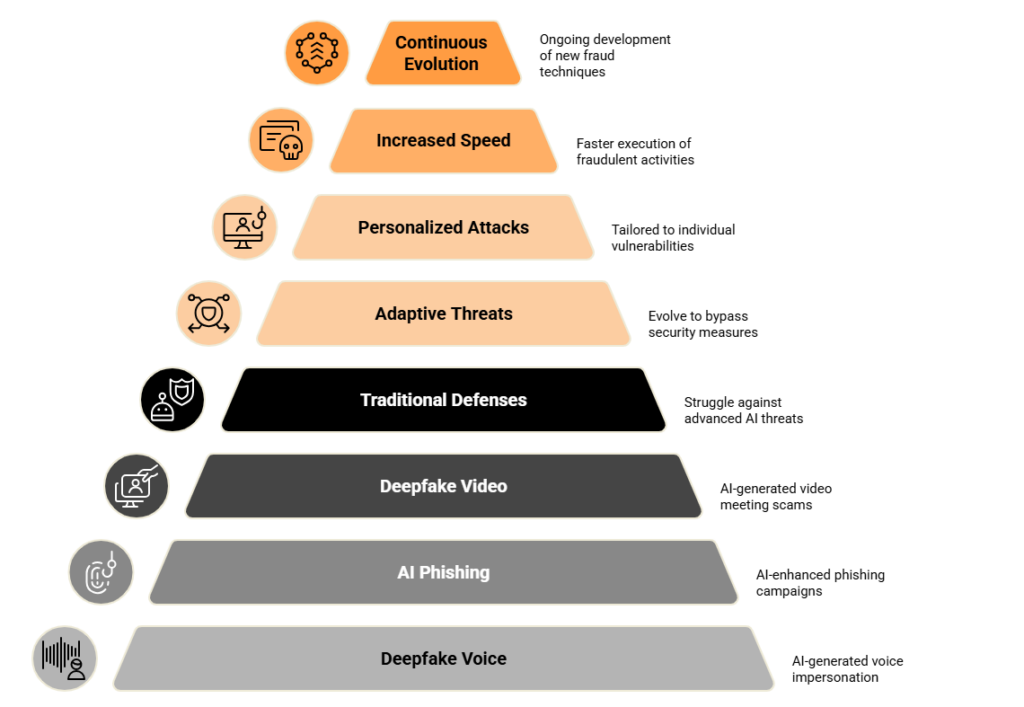
1. Deepfake Voice Fraud
Several organizations have reported incidents in which attackers used AI-generated voices to impersonate senior executives. Employees believed they were responding to legitimate requests and authorized substantial financial transfers.
These attacks demonstrated how convincingly AI can mimic human speech and exploit trust within organizations.
2. AI-Enhanced Phishing Campaigns
Security researchers have observed a rise in phishing attacks generated with AI tools. Compared with conventional phishing attempts, these emails exhibit better grammar, stronger personalization, and greater contextual relevance, making them harder to detect.
3. Deepfake Video Meeting Scams
Attackers have also used AI-generated video technology to impersonate executives during virtual meetings. Employees, convinced they were communicating with legitimate colleagues, approved transactions and disclosed sensitive information.
These incidents highlight how AI is transforming social engineering into a highly sophisticated threat.
4. Why Traditional Defenses Struggle
Most legacy security systems were designed to stop known threats and fixed attack patterns. AI-powered cyberattacks introduce entirely new challenges.
5. Adaptive Threats
AI-enabled attacks continuously evolve, reducing the effectiveness of signature-based detection systems.
6. Personalized Attacks
Traditional security tools often struggle to detect attacks specifically crafted for individual victims.
7. Increased Speed
AI automates tasks that previously required manual effort, enabling threats to spread at unprecedented scale.
8. Continuous Evolution
Attack techniques can change rapidly, making it difficult for legacy defenses to keep pace.
As attackers automate intelligence itself, cybersecurity teams are confronting threats that can learn, adapt, and improve over time.
The Defense Side: Fighting AI with AI
Fortunately, artificial intelligence is also becoming a powerful weapon for defenders.
1. AI-Powered Threat Detection
Machine learning systems can analyze enormous amounts of data and detect suspicious behavior that traditional security tools might overlook.
2. Behavioral Analytics
Modern cybersecurity platforms focus on identifying unusual activities rather than relying solely on known attack signatures.
Abnormal login attempts, unexpected data transfers, and suspicious user behavior can trigger alerts before significant damage occurs.
3. Automated Incident Response
AI helps organizations:
- Isolate compromised systems
- Block malicious traffic
- Prioritize critical alerts
- Accelerate response times
Automation enables security teams to manage threats more efficiently and reduce the impact of attacks.
4. Continuous Monitoring
AI-driven systems provide round-the-clock surveillance and help organizations identify emerging threats before they escalate into major incidents.
As cyberattacks become increasingly sophisticated, intelligent defenses are becoming equally essential.
The Future of Cybersecurity Starts Now
Artificial intelligence is transforming cybersecurity for both attackers and defenders, making continuous learning and advanced skills more important than ever. At Certify360, we equip professionals and organizations with industry-relevant training, globally recognized certifications, and hands-on learning experiences to navigate the evolving threat landscape. As AI-driven cyber warfare becomes a reality, those who invest in knowledge and preparedness today will be better positioned to secure the digital future.
FAQ’s
1. What are AI-powered cyberattacks?
AI-powered cyberattacks use artificial intelligence to automate and enhance malicious activities.
2. How do hackers use AI?
Hackers use AI for phishing emails, deepfake scams, malware creation, and vulnerability discovery.
3. Why are AI-powered attacks dangerous?
They are faster, more personalized, and harder to detect than traditional cyber threats.
4. How can businesses protect themselves?
Businesses can use AI-based security tools, behavioral analytics, and cybersecurity awareness training to strengthen their defenses.