
How to Use Learning Analytics to Track Your Certification Progress
Introduction
Preparing for a certification exam can feel overwhelming, especially when you’re unsure whether your study efforts are actually working. In such situations, learning analytics becomes particularly valuable.
By analyzing study data, performance patterns, and progress indicators, you can therefore make smarter decisions about how to prepare and improve outcomes.
In this article, accordingly, we’ll explore how to use learning analytics effectively, what exam performance metrics matter most, and how data-driven study insights can ultimately accelerate your certification journey.
Table of Contents
What Is Learning Analytics in Certification Preparation?
Learning analytics refers to the collection and analysis of data generated during your learning process. When applied to certification preparation, it provides measurable visibility into how you study, what you understand, and where you need improvement.
Using a learning analytics certification approach means you don’t rely on guesswork. Instead, you track:
- Practice test performance
- Time spent per topic
- Knowledge retention trends
- Skill gaps
This structured visibility helps transform preparation into a strategic, measurable process. Platforms like Certify360 help you to have learning analytics in certification preparation.
Why Tracking Certification Progress Matters
Tracking certification progress matters because, without consistent monitoring, learners may overestimate their understanding or spend excessive time reviewing familiar material.
Moreover, untracked preparation often leads to overlooked weaknesses and inefficient study habits. By contrast, evaluating progress regularly allows you to identify gaps early and adjust strategies accordingly.
Consequently, you can optimize study time and build confidence before the exam. Ultimately, tracking ensures your effort remains focused, measurable, and aligned with your certification goals.
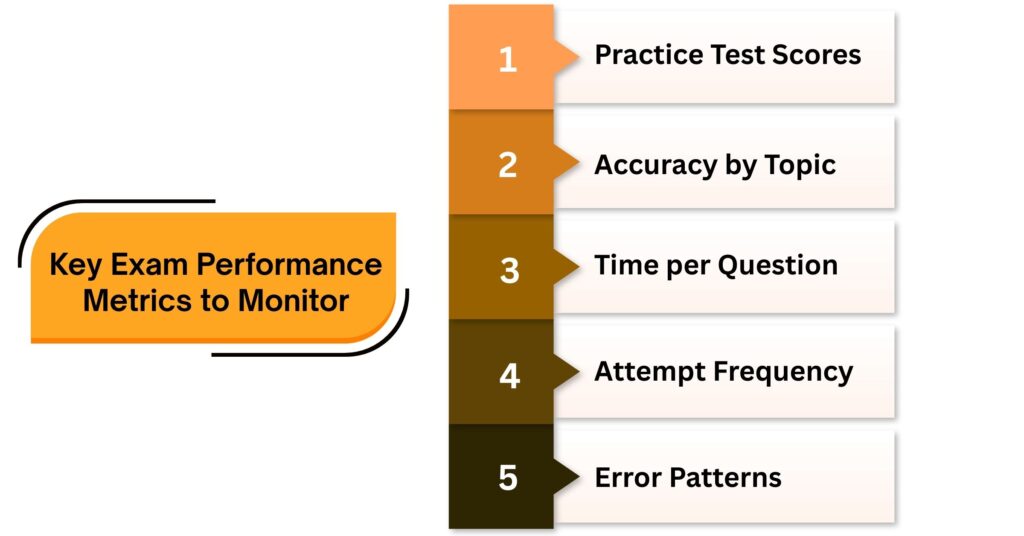
Key Exam Performance Metrics to Monitor
To make learning analytics actionable, focus on meaningful exam performance metrics. These indicators reveal how prepared you truly are.
1. Practice Test Scores
First, track practice test score trends over time rather than focusing on isolated attempts. This approach provides clearer insight into progress.
Moreover, consistent improvement signals readiness for certification, while stagnation, on the other hand, highlights areas needing reinforcement. Therefore, reviewing patterns regularly supports better planning and focused preparation strategies.
2. Accuracy by Topic
Next, analyze accuracy by topic to understand performance distribution across subject areas. By breaking results down, you can therefore pinpoint weaker domains more effectively.
Consequently, this prevents generalized studying and encourages targeted improvement. Furthermore, prioritizing low-scoring topics ultimately strengthens overall comprehension and builds balanced certification readiness over time.
3. Time per Question
Next, analyze accuracy by topic to understand performance distribution across subject areas. By breaking results down, you can therefore pinpoint weaker domains more effectively.
Consequently, this prevents generalized studying and encourages targeted improvement. Furthermore, prioritizing low-scoring topics ultimately strengthens overall comprehension and builds balanced certification readiness over time.
4. Attempt Frequency
Similarly, reviewing attempt frequency offers insight into engagement with challenging topics. Repeated attempts may demonstrate persistence; however, they can also signal difficulty mastering concepts.
Therefore, interpreting this metric carefully is essential. By adjusting study methods accordingly, learners can improve retention and avoid inefficient repetition during preparation.
5. Error Patterns
Finally, identifying recurring error patterns reveals deeper learning gaps beyond surface mistakes. By examining misunderstandings, you can therefore refine study techniques and materials.
Instead of repeating ineffective habits, learners can adjust strategies accordingly. As a result, addressing root causes promotes stronger understanding and more consistent certification progress.
Using Data-Driven Study Insights to Improve Results
Collecting data is only half the process, interpreting it is where real value lies. Applying data driven study insights can reshape your preparation strategy.
1. Adjust Study Focus
First, adjust your study focus by shifting time toward topics where metrics indicate lower accuracy or confidence. Consequently, this targeted effort improves understanding and ensures preparation remains balanced and strategically directed.
2. Personalize Learning Methods
Next, personalize learning methods when analytics reveal low retention levels. For instance, experiment with visual aids, simulations, or spaced repetition. As a result, alternative approaches reinforce comprehension and support stronger long-term knowledge retention.
3. Set Measurable Goals
Moreover, set measurable goals to guide progress effectively. Define targets such as increasing topic accuracy, reducing response time, or improving mock test consistency. Therefore, structured benchmarks create accountability and motivate continuous improvement.
4. Monitor Momentum
Finally, monitor momentum by reviewing analytics regularly throughout preparation. This practice ensures alignment with certification timelines and objectives. Ultimately, consistent evaluation supports sustained progress and prevents last-minute performance surprises.
Tools and Platforms That Support Learning Analytics
Most modern learning platforms and exam preparation tools include built-in analytics dashboards offering:
- Progress tracking visualizations
- Adaptive learning recommendations
- Detailed performance breakdowns
- Comparative benchmarking
Leveraging these features allows candidates pursuing a learning analytics certification pathway to maintain objective visibility throughout preparation.
Best Practices for Analytics-Driven Certification Preparation
To maximize effectiveness:
- Review metrics weekly instead of occasionally
- Avoid obsessing over single test results
- Combine quantitative data with qualitative self-reflection
- Update study plans based on evidence
- Maintain consistency in practice assessments
Analytics works best when treated as an ongoing feedback loop rather than a one-time evaluation.
Ready to take control of your certification journey?
Start applying data-driven strategies and track your progress with confidence through Certify360. Explore smarter preparation tools, gain actionable insights, and move closer to exam success, sign up today and transform the way you learn.
FAQs
1. What is learning analytics in certification preparation?
Learning analytics in certification preparation refers to collecting and analyzing study data such as practice test scores, time spent per topic, and error patterns. This data helps learners identify strengths, weaknesses, and progress trends, allowing for more strategic and effective exam preparation.
2.How do exam performance metrics improve certification success?
Exam performance metrics provide measurable insight into readiness. By tracking accuracy, timing, and score trends, candidates can identify knowledge gaps early. As a result, they can adjust study plans, focus on weak areas, and improve overall performance before the final exam.
3. What are data driven study insights?
Data driven study insights are conclusions drawn from learning analytics data. Instead of guessing what to revise, learners use measurable evidence to adjust strategies. Consequently, study sessions become more targeted, efficient, and aligned with certification goals.