
MCP certification is a professional credential that validates knowledge of the Model Context Protocol, including its architecture, components, interactions, security, governance, and ecosystem.
The MCPA certification is offered by Linux Foundation Education in collaboration with the Agentic AI Foundation. It is vendor-neutral, so the exam focuses on MCP concepts rather than a specific AI platform or vendor.
MCP provides a standardized way for AI applications to interact with external tools and data. This makes protocol knowledge relevant to developers building AI agents, LLM applications, enterprise AI systems, and tool-integrated workflows.
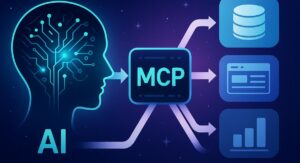 MCP helps standardize how AI applications connect to external capabilities such as databases, APIs, files, and developer tools.
Its architecture uses hosts, clients, and servers, while MCP servers can expose tools, resources, and prompts. MCP messages use JSON-RPC, making protocol fundamentals useful for developers working on AI integrations.
MCP knowledge can support several technology career areas:
-
AI application development: MCP can help developers connect AI applications with external capabilities.
-
AI agents: MCP provides concepts for understanding how agents access tools and resources.
-
LLM tool integration: Developers can use MCP to structure connections between LLM applications and external services.
-
AI platform engineering: Platform teams can apply MCP concepts to enterprise AI integration environments.
-
AI security and governance: MCP knowledge helps professionals understand permissions, trust boundaries, authentication, and authorization.
What Is the MCP Certification Syllabus?
The MCP certification syllabus is organized around five major exam domains. Understanding their weight can help candidates prioritize preparation.
|
Exam Domain |
Weight |
|---|---|
|
MCP Fundamentals |
16% |
|
Architecture & Components |
14% |
|
Interactions & Execution |
26% |
|
Security & Governance |
24% |
|
Use Cases & Ecosystem |
20% |
Interactions & Execution carries the highest weight at 26%, followed by Security & Governance at 24%.
Key MCP Exam Topics
The MCP exam evaluates whether candidates understand how the protocol works and how it should be used responsibly. Key topics include:
-
MCP fundamentals: Understand the protocol’s purpose, scope, and core concepts.
-
Architecture and components: Learn how hosts, clients, servers, schemas, and capabilities interact.
-
Tools, resources, and prompts: Understand the capabilities MCP servers can expose to AI applications.
-
Protocol interactions: Learn JSON-RPC, tool invocation, response handling, and interaction patterns.
-
Security and governance: Study trust boundaries, permissions, authentication, authorization, consent, auditability, and observability.
-
Use cases and ecosystem: Understand practical MCP applications and broader ecosystem considerations.
Candidates should study the current MCP specification rather than relying only on older tutorials because the protocol continues to evolve.
Who Should Take MCP Certification?
MCP certification is particularly useful for professionals working with AI applications, agents, integrations, platforms, or governance. Relevant audiences include:
-
Software developers: Developers can strengthen their understanding of AI application and tool integration patterns.
-
AI and ML engineers: Engineers can apply MCP concepts when connecting models with external capabilities.
-
AI agent developers: MCP knowledge can support standardized tool and resource access for agents.
-
AI architects: Architects can evaluate AI integration, interoperability, and security approaches.
-
AI governance professionals: Governance teams can better understand MCP permissions, security, and accountability.
-
Technical product managers: Product managers can understand MCP-enabled AI capabilities and requirements.
There are no formal prerequisites for the MCPA exam. However, familiarity with APIs, JSON, LLM applications, JSON-RPC, authentication, authorization, and AI agents can make preparation easier.
What Are the MCP Certification Requirements?
The MCP certification eligibility requirements are accessible because the MCPA is designed as a foundational credential. Candidates can benefit from the following background:
-
Programming or software development: Basic development knowledge makes protocol concepts easier to understand.
-
APIs and JSON: Familiarity with APIs and structured data supports MCP communication concepts.
-
LLM applications: Understanding LLM-based applications provides useful context for MCP.
-
AI agents and tool use: Familiarity with agents makes MCP use cases easier to understand.
-
Security fundamentals: Knowledge of authentication and authorization helps with MCP security topics.
Advanced machine learning expertise is not required to begin learning MCP.
How Much Does MCP Certification Cost?
The listed MCP certification cost is $250 for the exam. Current certification information also states that the credential is valid for two years, with 12 months of exam eligibility and one retake.
Because certification pricing and policies can change, candidates should confirm the latest information before purchasing the exam.
How Should You Prepare for the MCP Exam?
A focused MCP certification preparation plan can be completed in approximately three months. The following approach balances conceptual learning, security knowledge, and hands-on practice.
Month 1: Learn MCP Fundamentals
Study MCP architecture, hosts, clients, servers, tools, resources, prompts, JSON-RPC, and the current specification. Focus on understanding how the components work together.
Month 2: Focus on Interactions and Security
Study tool invocation, request and response flows, errors, permissions, trust boundaries, authentication, authorization, consent, and governance. Give additional attention to the two highest-weight domains.
Month 3: Build and Review
Build a small MCP project, review all five exam domains, revisit the specification, and practice scenario-based questions. Focus on understanding why components behave in particular ways rather than memorizing definitions.
What Projects Can Help You Learn MCP?
Hands-on projects can reinforce certification knowledge while adding practical experience to an AI developer portfolio. Consider projects such as:
-
MCP File Assistant: Build an AI assistant that retrieves approved files through an MCP server with appropriate access controls.
-
MCP Database Assistant: Create controlled MCP tools for database queries using authentication and authorization.
-
Developer Productivity Agent: Build an agent that interacts with approved development tools through MCP for information retrieval or debugging.
These projects provide practical experience with MCP servers, clients, tools, APIs, security, and agent workflows.
How Does MCP Certification Support an Agentic AI Career?
MCP is closely connected to agentic AI because agents often need to interact with external systems. MCP provides a standardized approach for exposing tools and resources to AI applications.
A potential career progression is:
AI fundamentals → LLMs and APIs → MCP fundamentals → MCP servers and tools → Agent workflows → Production AI systems
Potential roles include:
-
AI Developer: Apply MCP concepts when building AI-powered applications.
-
AI Engineer: Combine MCP with LLMs, APIs, tools, and production AI systems.
-
Agentic AI Engineer: Build agents that interact with external tools and services.
-
AI Platform Engineer/Architect: Apply MCP when designing enterprise AI platforms and integrations.
MCP certification demonstrates protocol knowledge, but production experience, software development skills, and security expertise remain important for advanced roles.
Is MCP Certification Worth It in 2026?
MCP certification can be worth pursuing in 2026 if you work with AI applications, agents, tool integration, AI platforms, or AI governance.
Its value is strongest when combined with practical experience. A useful combination is:
MCP certification + AI fundamentals + software development + hands-on MCP projects + security knowledge.
The MCPA should therefore be viewed as a foundational credential rather than proof of extensive production engineering experience.
MCP Certification vs Agentic AI Certification
MCP certification and agentic AI certification address different areas. Understanding the difference can help professionals choose a suitable certification path.
|
Certification |
Primary Focus |
|---|---|
|
MCP certification |
MCP architecture, interactions, security, ecosystem |
|
Agentic AI certification |
Agents, planning, tools, orchestration, autonomy |
|
Generative AI certification |
LLMs and GenAI applications |
|
Cloud AI certification |
AI services and cloud platforms |
|
ML certification |
Machine learning models and workflows |
For an AI certification 2026 roadmap, MCP works well as a specialized credential after developing AI, API, and software fundamentals.
What Is the Future of MCP Certification?
MCP continues to evolve alongside agentic AI and enterprise AI adoption. Changes to the specification can affect architecture, authorization, scalability, interoperability, and implementation practices.
As the ecosystem matures, professionals will need continuous learning in addition to certification. Keeping up with specification changes and building real MCP integrations can help turn foundational knowledge into practical expertise.
MCP Certification: Key Takeaways
MCP certification is most valuable when exam preparation is combined with practical understanding. The main points to remember are:
-
MCP certification: It validates foundational knowledge of the Model Context Protocol and its ecosystem.
-
MCPA certification: It is a beginner-level, vendor-neutral credential focused on MCP concepts and applications.
-
Exam domains: The exam covers five domains, with Interactions & Execution carrying the highest weight.
-
Security and Governance: This domain accounts for 24% of the exam and deserves focused preparation.
-
Prerequisites: There are no formal prerequisites, although technical and AI fundamentals can help.
-
Exam cost: The listed exam cost is $250, subject to confirmation from the certification provider.
-
Hands-on projects: Practical MCP projects can strengthen exam preparation and career readiness.
-
Agentic AI pathway: MCP certification can complement broader agentic AI certification pathways.
Build Your MCP Expertise With Certify 360
Ready to strengthen your MCP and agentic AI skills? Explore certification-focused learning with Certify 360 and build the knowledge needed for modern AI protocols and agentic applications.